Art Retrospective


Hi Everyone!

The long-time followers of this blog probably will recognize some of these pieces, but since I just finished my latest art project yesterday, I thought it might be fun to lay everything I’ve done since I started art lessons out in one post to kind of get a perspective on it.  If you’ve seen them before, just humor me.

When I walked into Bonnie’s business for the first time, the last art lesson I took occurred about 37 years before when I was 8.  Learning to do art was one of those things on my list of things to do sometime, and I had seen her sign on the side of the road for “The Cottage Gallery,” which stated that she did framing, works on commission and art lessons.  After we met and talked, we realized that we had met each other before – about 20 years before, Mark and I had rented our first house in Alabama from her father.  She graciously agreed to teach me art.

The first picture I ever tried was this drawing of a lighthouse.  (Bonnie lets you pick out the subjects that interest you, only pulling you in if you try something too hard for your current skill level.)  I remember how wonderful it was to learn that doing art did not mean that you had to draw a straight line without a ruler!
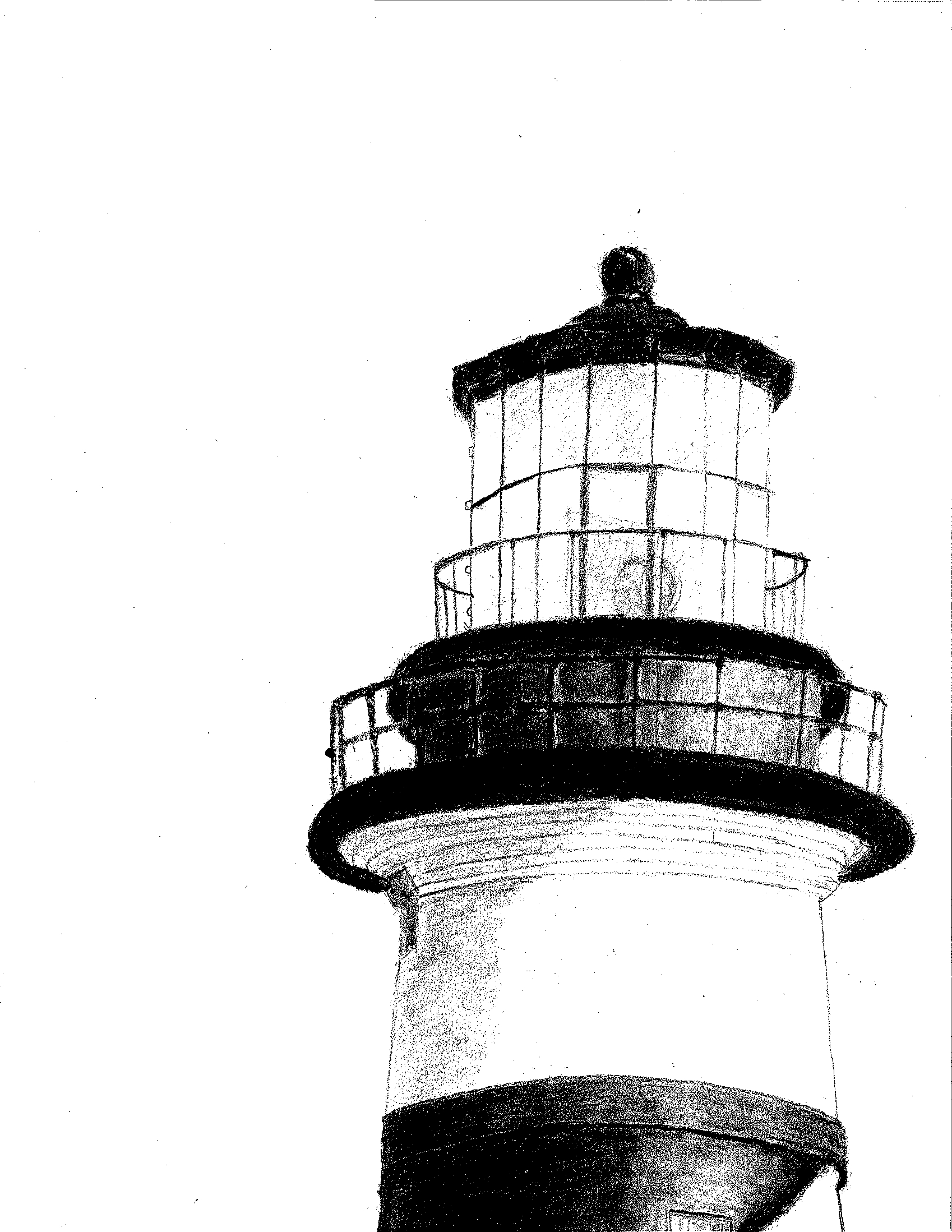
I used a model from a magazine for that picture; the next picture that I did I designed on my own. I did not plan on the clouds being quite so dark, but it was a pastel drawing and I was working on it during Kayla’s swimming lessons. A spot of water fell on the original cloud color, and the only way around it was to darken the clouds considerably. I ended up liking the effect though.

At close to the same time, I also was working on a pastel picture of Tyra when she was about three. Pastels are a chalk like substance and very forgiving to work with. This picture remains one of my favorites even after about two years of lessons now. Unfortunately, the photograph does not do the richness of the browns in this pastel portrait justice.

Sticking with the pastel theme for at least one more picture, I then completed this painting of a cardinal on a cherry blossom branch. (Works made out of pastels are still called “paintings” and not “drawings.”

For my next drawing, I decided to try watercolor, and my first set of human figure(s). The first picture came from a photograph I had of Kayla at her 2009 recital, and to me, watercolor seemed the only appropriate medium to capture the feeling of that moment.
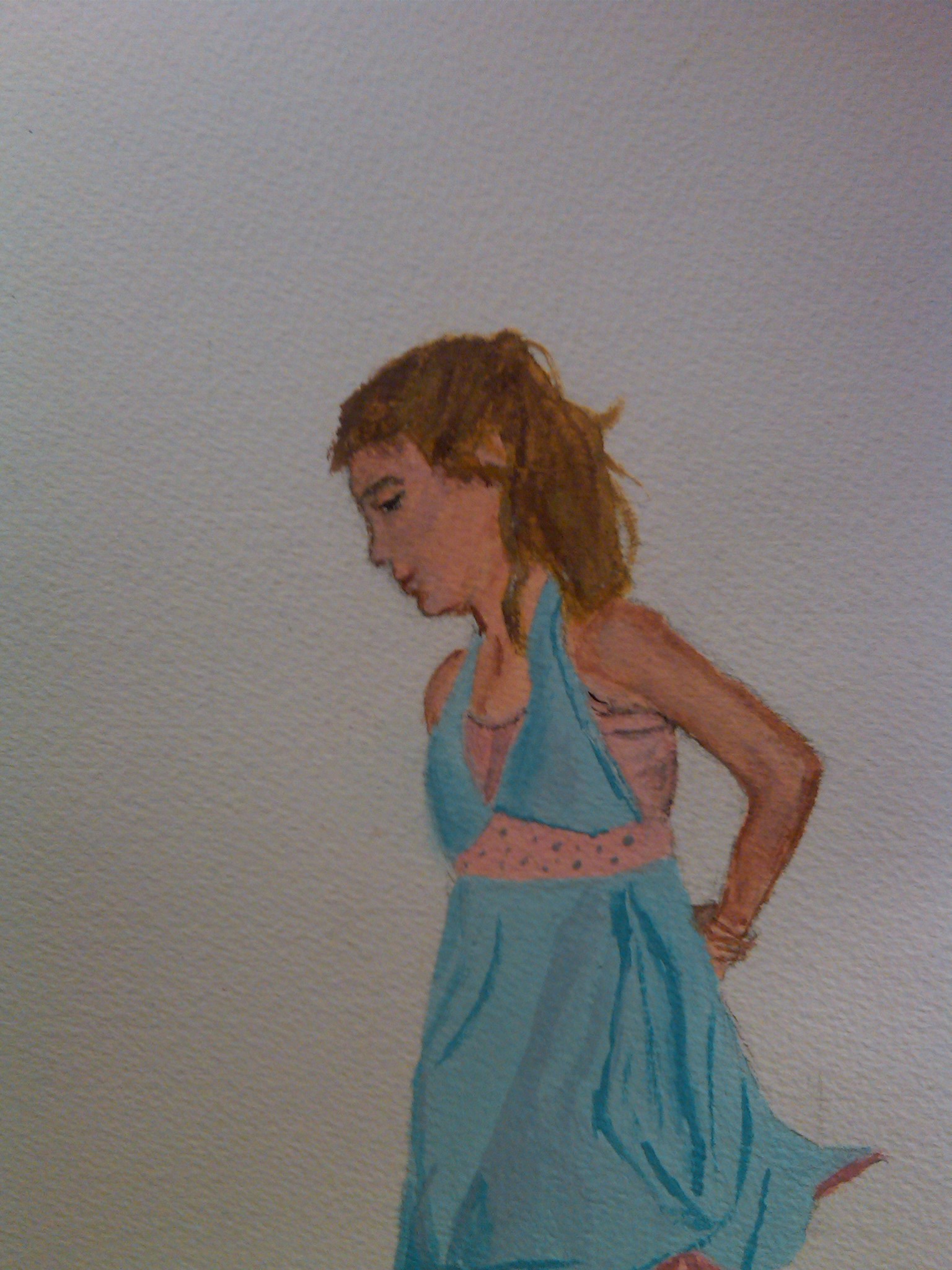
The real portrait is not nearly this dark, but this snapshot still gives you the flavor of the painting.

I also tried a watercolor painting of Kayla when she was in a formation with two other dancers.  The green background behind the dancers was an accident.  I have to admit that even after 1 1/2 to 2 years, I still really don’t like that background.  (Kayla is the one in the middle.)

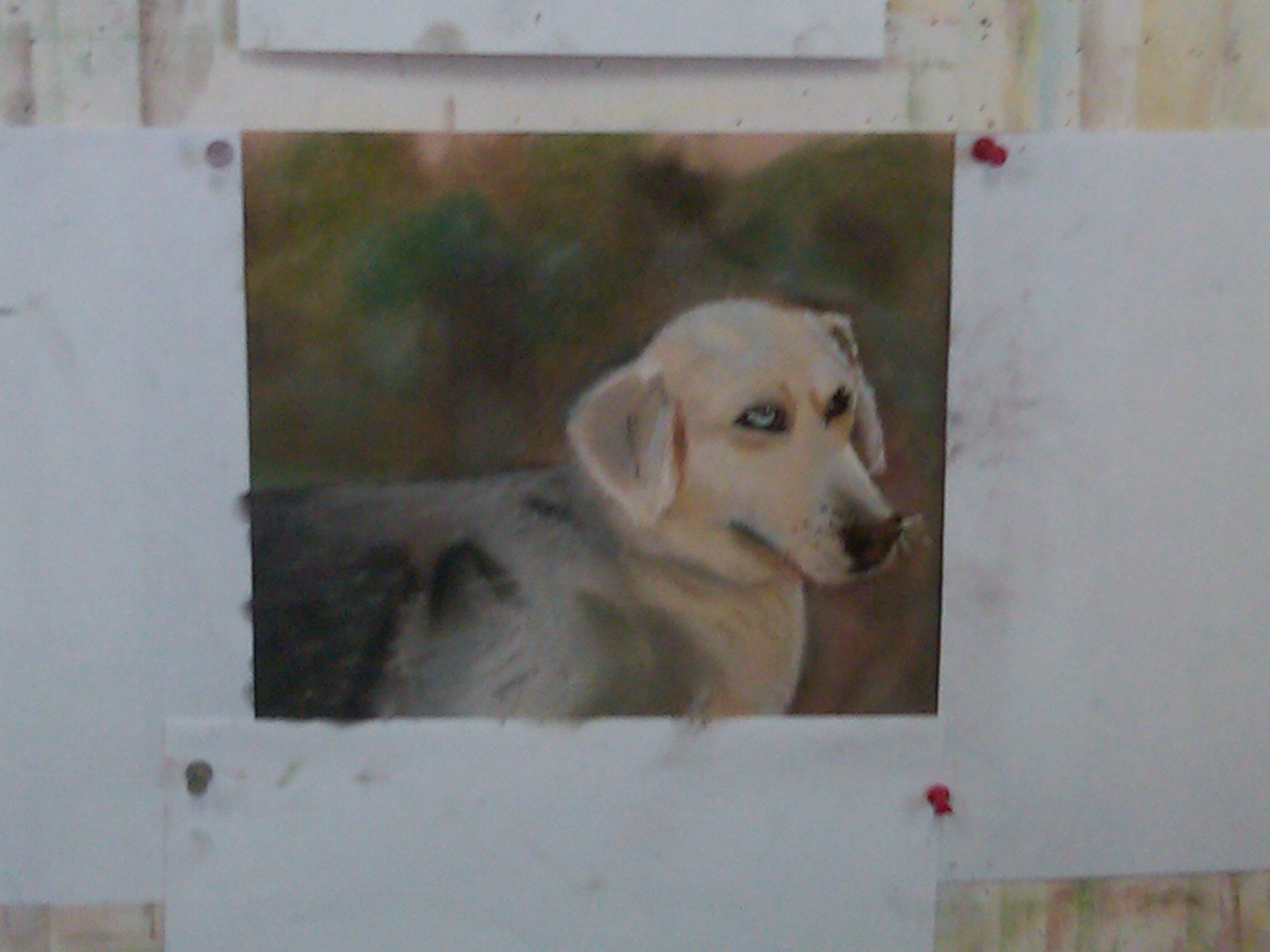
I went back to pastels to try to paint a pastel portrait of Mandy for Kayla. This painting was the best I could do, at least at the time. I may give another try sometime at getting a good portrait of Mandy. As you can imagine, Mandy’s unique husky-basset hound features present an interesting challenge in terms of perspective.
I reverted back to graphite pencil for my next challenge, a black and white rendering of a close-up of some Lantana we had growing against the white brick of the building I work in one summer.

Making a black and white drawing from a color photo is a challenge; you are focused to concentrate solely on the value (the amount of light and dark) in an object rather than on both its value and color.

I decided to try my hand at using acrylic paint next, and, using a magazine photograph as a model, painted this portrait of two blue birds in a mountain stream.

Blue Birds

I had a lot of fun with it. Acrylic is a fairly forgiving, albeit fast drying, medium.

I made this pastel painting of a bird called a sooty tern next. It also is one of my favorites.

After that one, I did my first oil painting. Oil painting is very different from acrylic painting; oil paint dries very slowly and so can be put on the canvas in different ways. This painting was my attempt to make a color painting from a photograph of Grandma and Grandpa when they were young.

I declared this picture finished at one point, but then decided it wasn’t and so went back and made some more changes. The version above is the final version.

Somewhere in all of this, I also took the time to do the following watercolor from some photographs I took of Cades Cove. I am going to try out a pet theory with this one. I am going to name it “What is Man?” based on the size of the mountains and the smallness of the human additions to the valley and enter it in a few art shows. The title makes it sound like I was really trying to be profound which may give me points with judges, but you and I will know that I really just wanted to paint a pretty landscape.

Close up of Finished Painting

I tried my first abstract painting, in acrylic. It is called “The Beginning” and is part of a piece called “The Fibonacci Series” that ultimately will involve six portraits. It is based upon the following semi-quote from Genesis: In the beginning,… the earth was without form and void and the Spirit of God hovered upon the water.”

This picture is interesting to me because after carefully considering it for about three months, I am convinced that I am not done with it and so am going to have to go back to it. The problem is that I only see the picture I meant to paint if I turn the lights in my office out in the afternoon, then walk over and look at the picture from the left at between a 35 and 45 degree angle. So, I am going to try to get that same look on it for front and day time viewing.

My final project has been the hardest to date, but it has been very, very worthwhile. I just finished it yesterday. Interestingly, it is just an intermediate step to a final project. This drawing is taken from a passport photograph my mother, sisters and I had taken back in 1972. Eventually, I am going to do an oil painting of it, but I decided before I did an oil painting of it, perhaps I better try it in pencil first to get a real feel for what is involved. I’m glad I did; I learned an awful lot by doing so!
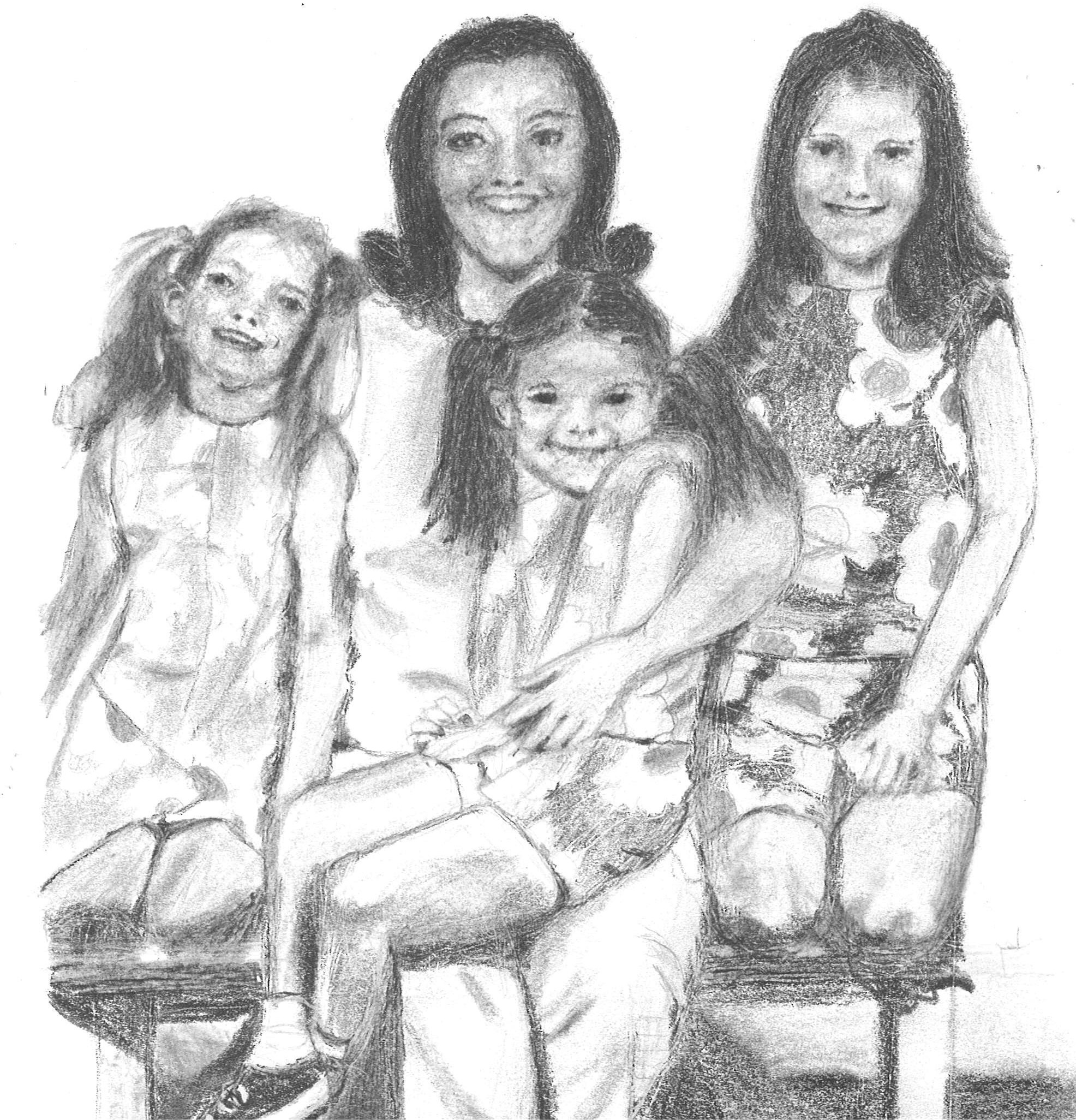
Well there you have it; a retrospective of about 2 1/2 years in the life of a beginning art student! For those of you still awake by the end of this, I hope you have a good Thursday and a wonderful weekend!

Nancy

11 Years Ago Today….


Good morning Everyone!

11 years ago today, I was preparing to take two depositions that I had been trying to schedule for months in Birmingham, Alabama on a relatively small case.  I had some time before I had to leave, since they didn’t start until 12 or 1, so was reviewing some notes when Terri, my assistant at the time (back when I had an assistant), came in and said, “Hey, the World Trade Center’s on fire.”  I didn’t understand what she meant, so I asked and she told me that a plane had just crashed into the World Trade Center.  

I remember a sort of “that’s too bad” feeling, the kind you get when a plane crashes anywhere, saying a quick prayer for the victims and wondering how on earth a plane could get that far off course before loading my stuff up and heading out for the depositions.

We got both of them done, and on my way home I stopped at a Birmingham mall to buy some make-up.  When I stopped, I was surprised to see that many of the stores were already closed at 3 in the afternoon, and the rest of them were closing at 6.   I decided then I needed to call Mark (who, due to his father’s death and the winding up of the family business had been between jobs and able to watch the news all day) to find out what was going on.  I had a bag phone then, and you didn’t use them as casually as we use cell phones now. 

I told Mark about the stores’ closing and how surprised I was, and that’s when Mark said, “I don’t think you realize how big this really is.”  That’s when I learned for the first time about the second plane, the towers falling, the Pentagon crash and the field in Pennsylvania.  When I got home that night, I was stunned as I watched the footage of the planes crashing into the towers and the Pentagon and horrified as I watched the Towers crumble into themselves in a cloud of toxic dust.  I was shocked and grieved by the senseless loss of life. 

I remember watching the Memorial Service a few days later at the National Cathedral.  I watched our nation’s leaders file into the church for the ceremony.  Leaders from both parties.  Political opponents who, for at least one brief moment, remembered that they were Americans first.  I watched as then-President Bush got up to speak that day, and noticed that there was not one face in the audience at the Cathedral that envied him being in that position on that day.

For a few weeks, we were all Americans first and everything else second.  Family and God suddenly seemed a lot more important than it had before September 11 and a nation grieved with the victims and their family.

11 years later, September 11, 2001 has changed our nation and many families in ways too profound to comprehend, from the very littlest of items, like the fact that my daughter will never know the feeling of watching breathlessly at the arrival gate for your grandparents to get off the plane as the passengers come down the gangplank, to those irreplaceable losses that leave aching, unfillable  holes, like the death of a loved one. 

I wish September 11, 2001 had not happened.  The costs of that day are still too high and too hard to bear.  A very small part of me, though, wishes that, without the same cost, we as a nation could find ourselves back in that place where we are all Americans first, everything else second.  This feeling doesn’t mean that we all have to agree on everything  all the time, or even most of the time.  It just means that, at the end of the day, we realize that those things that connect us are far stronger than the things that drive us apart.

And my last thought last night before I went to sleep?  One more prayer that, at least for today, we remain safe and whole once more.

Nancy

Things that make me go hmmm….


Good morning Everyone!

Here are a few things that make me go  “hmmmm….” :

1)   “Mom, where is the screwdriver?”

Dog, eating, counter

2) Plates clinking mysteriously in the kitchen when Mark, Kayla and I are together in the den.

3)  Squirrels hopping aimlessly in the center of the road after I screech my car to a full stop to keep from hitting them.

4) My dogs playing the “barking” game every time I pick up the phone.

5)  The following dialogue:

From the other room:  Bang, squeak, Bang, BANG!  
Me:  What are you doing? 
Kayla:  Nothing! 


6) Watching the Gecko, Flo and the Allstate mayhem guy and wondering exactly how far can each insurance company spin the campaign out?

7) The AFLAC Duck’s mysterious absence from the airwaves.

8)  For the past three months, the cashier announcing at the drive-thru at the local Burger King that the frozen coke machine is broken.  (I don’t know if I am more bemused by the fact that the thing has been broken for three months now and they are not fixing it or the fact that I am stupid enough to keep asking about it after three months.)

8) A local fast food burger joint running out of hamburger!

9) An Auburn University football season starting at 0-2.

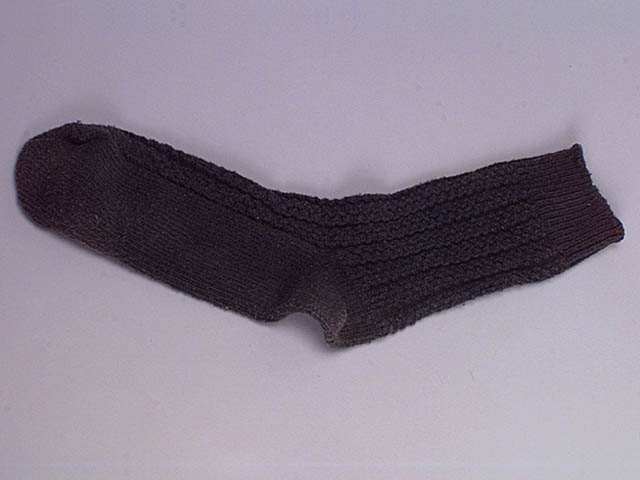
10)  The chewed, now toeless sock sitting in the middle of the living room floor when I know for certain I safely locked all the socks away from the dogs only thirty minutes ago.

11) Political commercials.   Any of them.

12) Political commentary.  All of it.

13) The fact that I can’t make a comment about the Chick-Fil-A cows good or bad without the possibility that it will be construed as a political statement, good or bad.

14) The mysterious return of my soft pastels (a chalk-like type of painting substance) to my bedroom when they are supposed to be safely in the craft-room unused.

Have a great day!

Nancy

The Working Parents’ Olympics


Hi Everyone!

I have, a little to my surprise, found that I miss the Olympics, both the competition and the pageantry.  So, to fill this void in my television watching life (at least during those moments when I’m not watching football) I want to propose a new set of Olympic games – the Working Parents’ Olympics.  There are several interesting events that we could use to start them off.

Road Rage = Automatic Disqualification from the Event!

The first event would be “Rush Hour Racing.”  Contestants begin at various points equidistant from the race’s end at the height of morning rush hour (for the qualifying heats) at the major city closest to the Olympic venue, with the finish line in the very heart of the city’s business district.  To provide a challenging twist, the race for the gold is held during Friday afternoon rush hour preceding a three-day weekend and is run from the business district to the suburbs.  There would be time penalties given to contestants for road rage, swearing and any unfair tactics imposed on innocent drivers, but a contestant could also receive time deductions for successful management of stress as well as creative, productive uses of rush hour time.

The Commuter Cup Event

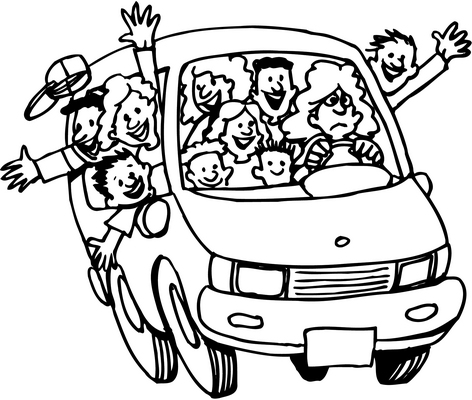
Another competition that would draw good TV ratings would be the commuter’s cup.  Each contestant is required to receive a car load of eight children with eight different activities to attend scattered across the Olympic venue.  The task is to deliver the children on time to each activity; a contestant is automatically disqualified from the final round if the drive and delivery exceeds 45 minutes, tops.  The winner is the one that, in the final race, delivers the children to each designated activity in the least amount of time.  Shamelessly exploiting America’s inexplicable and insatiable appetite for reality TV, each car will be provided with a hidden video camera.  To make the commuter cup races more realistic,  two of the eight children must be related to each other, and there is at least one child secretly assigned the role of whiner and another secretly assigned the role of instigator.

Grocery Shopping Relay

One of the more challenging events would be the Grocery Store Relays.  These races have both 400 and 800 meter races.  The 400 meter teams are teams of 4, while the 800 meter teams consist of 8 parents.  Each member of each team must complete a grocery shopping run in the shortest amount of time possible.  Each lap of the relay includes a shopping list, $100.00 in spending money and two children, although the ages of the children vary with each lap.  To add the element of chance, during at least one lap of each relay, randomly determined by drawing and hidden from the contestants, at least one child will demand an unexpected bathroom break.

The 1st lap includes a 1 and 2-year-old, the 2nd lap must be completed with a 3 and 4-year-old, the 3rd lap contestant races with a 5 and 6-year-old and (in the last lap for the 400 meter racers), the 4th lap comes complete with a 7 and 8-year-old.   In an effort to challenge the racers in the longer competition, the 5th lap will continue with two children, a 9 and 10-year-old, while the last three laps include on one child, but with additional circumstances.  The 6th leg of the 800 meter relay must be completed with an 11-year-old girl interested in leaving the store with one of everything she sees, whether she needs it or not, while the 7th leg includes a tired 12-year-old girl or boy barely willing to move.  Finally, the 8th lap must be completed with a hungry 13-year-old boy in the middle of a growth spurt – this situation challenges the contestants’ patience and wallet in one fell swoop!

Multi-Tasking Muddle

In an effort to bring some sense of realism to these games, another competition is the “Multi-tasking Muddle,” where contestants are placed at various work sites with tasks to complete, some work related, some family related.  The tasks require different skills to complete them, ranging from negotiation skills to typing skills to budgeting.  All of the tasks must be completed in less than one hour; the first contestant who finishes with the fewest mistakes wins the gold.

Preparing for Synchronized Sorting

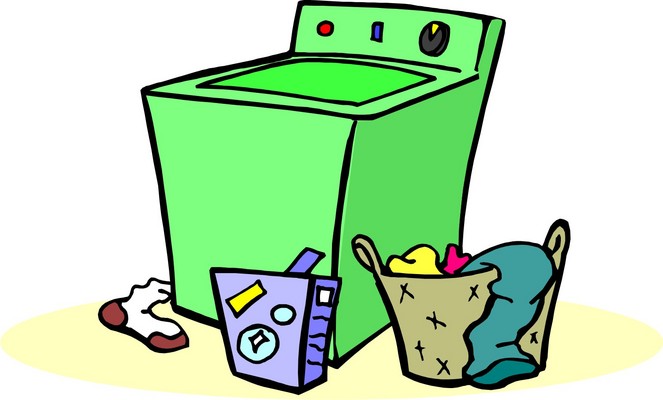
An event that will bring fun to one of the most boring activities on the household chores list is that of “Synchronized Sorting.”  A cross between crewing and synchronized swimming, synchronized sorting requires teams of four parents to sort through a large pile of dirty laundry in rhythm, in a recognizable pattern,  and as fast as possible – as a team event, the winner is the team that performs the best routine in the least time possible.

Sample Cooking Contest Entry

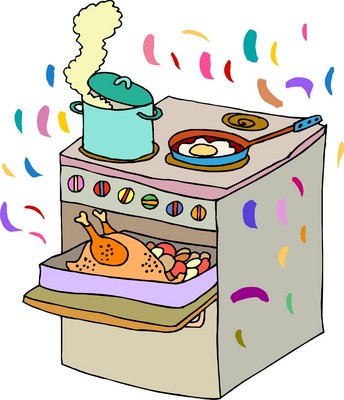
The next event, which will be scored based not upon time but skill and presentation, is the Menu Planning/Cooking Medley.  This contest, somewhat like the “Iron Chef” competition, but more reality based, requires each contestant to plan three consecutive dinner meals from a prescribed list of ingredients.  Each meal must be able to be prepared in 30 minutes or less using only the ingredients provided to each contestant.  Take-out is not allowed.  The ingredients will vary.  For example, one person may receive three apples, four pork chops, ketchup, pickles, flour and corn, while someone else may receive a head of lettuce, 1 pound of hamburger, ketchup, six peaches, 12 tomatoes and rice.  Contestants receive scores based on originality, acceptability to young children and spouses, presentation and time.

The final event in this first edition of the Working Parents’ Olympics provides the excitement of a ping-pong table tennis event with the tension of a scored event such as gymnastics – this is the “Arena of Argument Event.”  Teams of parents will compete with teams of children.  There will be different areas covered, such “Room-Cleaning,” “House-keeping,” “Attending Other Events,” and “Activities Beyond Years.”  There also will be different age levels – after all, arguing with a two-year old (which bears a suspicious resemblance to arguing with a computer, except that the computer cries less and reasons more) is very different from arguing with a 13-year-old!  Scores are based upon creativity of argument, tone (the less hateful and heated, the better), lack of sarcasm and use of humor.  A parental contestant is disqualified if he or she uses the rejoinder “Because I said so” while a child contestant is disqualified if he or she stomps a foot or makes a fist declaring, “You just don’t understand!”  Each round of argument  is restricted to three minutes.

I think that would be enough to cure my current Olympic void.  What other events might you like to see, and which do you think you would be the best at?

Have a good day everyone!

Nancy

What I Learned Over Summer Vacation


Good morning Everyone!

Sun, Summer

From ClickArt Online, by Broderbund

My mini-summer vacation and Kayla’s full summer vacation came to an end on Monday, and so I thought I’d share what I learned over my summer vacation.

Morning, wake up

From ClickArt Online, by Broderbund

1) I like not having to get up before 6 a.m.

Multi-tasking, work

From ClickArt Online, by Broderbund

2) Work expands to fill the time available for it.

3)  Planning is essential, even when you’re off.  Otherwise nothing gets done.

Moving Dolly, Moving Boxes

From ClickArt Online, by Broderbund

4) A six-week mini-break definitely helps when you are moving into one house and getting another ready to sell.

Tearing Out Hair

From ClickArt Online, by Broderbund

5) A parent can come up with multiple, innovative ways to discipline a 10-year-old, and the 10-year-old can still come up with multiple, innovative ways to drive the parent over the edge.

6) Kayla works very well with animals; both Darwin and Mandy are much better behaved at the end of this summer than they were at the beginning and it is all due to her training.  Mandy still grazes counters at will and Darwin still likes to chew, though!

Holding Hands

From ClickArt Online, by Broderbund

7) My little girl is growing up way too fast.  I”m glad she’s still willing to hold hands.

Different Rhythms

From ClickArt Online, by Broderbund

8) Stay at home parents work as hard as parents who work outside the home.  It’s just that the rhythms of the jobs are different.

9) Even off work, the temperatures in July and August in Alabama vary between miserable and intolerable. 

Dog Smiling

From ClickArt Online, by Broderbund

10) The dogs like having me home during the day.

11) I don’t mind hanging around with myself, after all.

Siesta, Nap, Snooze

From ClickArt Online, by Broderbund

12) I didn’t take a nap everyday like I thought I would!

From ClickArt Online, by Broderbund

13) Farmville is a lot of fun, but it takes way too much time to play.

14) Picking up is even more important in a small house than in a large house.

From ClickArt Online, by Broderbund

15) Your friends at work are still your friends even when you’re off work.

From ClickArt Online, by Broderbund

16)  Cooking is not my calling.

Have a great day everyone!

Nancy

The Olympic Learning Experience


Good morning Everyone!

Olympics, Olympic Torch

Olympic Torch, from Print Shop Professional 2.0

For those of you who perhaps have been spelunking or exploring untamed wilderness with no internet, TV or radio access, the 2012 Summer Olympics are being held in London right now.  Every night at seven, millions of Americans are tuning in to their local NBC channel to watch a “greatest hits” version of the Olympics, while as many as can possibly do so are also watching the events live during the day.

TV Remote

From Print Shop Professional 2.0

My family is no exception.  At 7 on weeknights, Kayla and I invariably ask Mark (as the male in the family, he apparently acquires by divine right sole access to the TV remote – well, divine right and the fact that the *&*&$*^#$#@&%$%&* thing refuses to work correctly for me or Kayla) to switch the television over to NBC, and the three of us watch whatever events might be on.

Swan dive, Diving

From Print Shop Professional 2.0

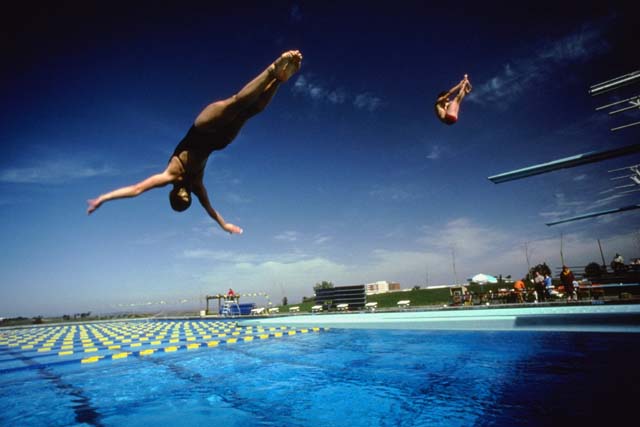
We turned on the other night to discover an event we weren’t even aware existed – synchronized (or, as the British would write, synchronised) diving.   FN1.   This was an event the three of us never dreamed existed.  Basically, instead of just one diver performing extraordinarily difficult and athletic dives, two divers are required to perform the same extraordinarily difficult and athletic dives as nearly as possible at the same time, with points given or deducted on top of the normal diving points for how temporally coordinated the performances are.  I have to wonder at what post-Summer Olympic meeting the diving committee came up with that idea.  I can just hear them now, at the after-dinner aperitif stage:

Hey guys, since the divers are beginning to get so good at the dives we thought were impossible to do, how ’bout we up the difficulty factor by making two of them dive at the same time!  That’ll show them!

Bicycle

From Print Shop Professional 2.0

Other Olympic events just seem vaguely incomprehensible to us.  For example, cycling.  I understand the concept of a bicycle race – you throw anywhere from 2 to 100 bicycles together at one place, called a starting line, and require them to travel to a second place, called a finish line, and the one that gets there first, wins.  But we saw an event one evening that I am still trying to figure out (not too hard, or I would have googled it by now) – teams of three bicyclists each on bikes without spokes in their wheels travel around an indoor track together.  I’m not sure how the winner was determined or what rules applied, except for the rule that each team of three bicyclists had to follow each other in a straight line.   FN2.

I pulled a list of the sports that are included in the summer Olympics.  Many of the Olympic events are fairly familiar to me, such as swimming, diving, racing and gymnastics, but others are not, although nothing in the summer Olympics is as foreign to me as the winter Olympic event of curling.  For example, rhythmic gymnastics, which appears to require the gymnasts to do routines with swirly ribbon things besides them, appears a bit odd at first blush, and who would have thought that “trampoline” was an Olympic sport, while neither baseball nor golf is?  (Actually, I believe baseball used to be an Olympic sport, but I am not sure about it.)  Badminton and ping-pong – excuse me, I mean table tennis – are fun to play, but I am not exactly sure how they rose to Olympic status.  I would love to see more of the Olympic events involving shooting, archery and fencing on TV, but at least so far I have managed to miss them.

TV Announcer

TV Announcer, from Print Shop Professional 2.0

Whether the sport is familiar, ie., soccer, or foreign, ie. rhythmic gymnastics, to me, one of the best things about watching them on TV is the commentary given by the announcers.  Somehow, NBC has managed to acquire individuals who are familiar with the sports they are showing, and the commentators help explain both the sport and how the contestants are judged.  That way, even if the sport is something completely new to me, I manage to learn a little bit while I am watching.

So kudos to the announcers, and to NBC who has managed to find commentators that can explain the events and scoring in sports like synchroniz[s]ed diving and rhythmic gymnastics, and here’s to another few days of the Olympics Learning Experience!

Now, if you’ll excuse me, I think I’ll try to find a televis[z?]ed trampoline medal event….

Have a great day!

Nancy

FN1.  One key spelling difference between British English and American English is the use of “ise” and various forms thereof (British) versus “ize” and various forms thereof (American) in certain words such as “synchronis[z]e.”  With the wonderful consistency that characterizes the English language, we Americans have graciously refused to “ize” some words, such as “televised” and “supervise.”   Either that, or someone just made a typo that stuck, since “s” and “z” are suspiciously close to each other on the keyboard!

FN2.  Regardless of how unfamiliar I am with a sport, I want to emphasize (or is it emphasise?) how much I respect the athletes who compete in ANY Olympic event – the training and prowess and effort each athlete brings to the games honors their country regardless of the final medal count.

Random Thoughts, III


Good morning Everyone!

Sock

1) No matter what you do, your dog will never chew your least favorite pair of socks.

Dryers

2) The dryer won’t eat one, either.

line

3) So you think you see the end of the line at Disneyworld?  Ha ha ha ha ha ha ha ha ha ha ha ha ha ha ha ha!

rain, umbrella

4) Best ways to make it rain:

a) Pay to get your car washed;

b) Plan an outdoor workday for yard work and painting;

c) Plan an extravagant outdoor event with no alternative indoor venue.

5) Children and dogs have a built-in parent romance interference sensor.

6) I find it hard to believe that Publisher’s Clearing House is really going to give away all of that money to someone who didn’t buy something from them.

7) Light bulbs always blow in threes.

8) Robotic vacuums rock!

9) Why is it that a person will wait patiently at a drive-thru for 10  minutes for someone else to get their food through the window, but honk at the car in front of them if it fails to move within 10 seconds of the line moving forward?

10) Your dog is programmed to wake you up at least 30 minutes before you are ready and then will sleep for hours after he or she has been fed and walked and you are up for good.

11) Should you worry if someone less mechanically inclined than yourself in your family calls to ask you where the hammer and screwdriver are?

12) If a child tells you he or she is doing nothing, be afraid.  Be very afraid.

Have a great day everyone!

Nancy

How Not To Sew In 10 Easy Steps


Good morning Everyone!

I made a trip to the fabric store yesterday.  The only place I like to shop at more than the fabric store is the craft store, which is why I try to limit my visits to both.

Sew

From Print Shop Professional 2.0

I would love to tell you how to sew, but I find I am better at explaining how NOT to sew.  Following any one, or all, of these 10 steps will ensure that, sooner or later, you will have attempted and failed to make an item of clothing that you can wear. Lest you be afraid that I am not speaking with authority, let me hasten to assure you that I have committed each one of these mistakes at one time or another in my 32 year career as an intermittent seamstress hobbyist.

Pattern Maker, sewing

Not This Kind of Pattern Maker!

1)  Fail to remember the name of the pattern maker. 

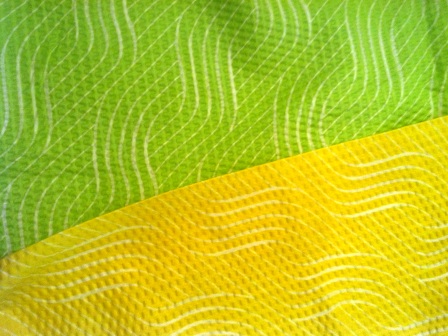
This one works especially well if you purchased fabric some time ago, picked out a pattern and now find that you need a different sized pattern.  Kind of like automobiles in America used to have the Big Three, in sewing, there are what I think of as “The Big Four” – Simplicity, McCall’s, Butterick and Vogue.   Here is an example to help you visualize how properly to perform this step.  I have two different kinds of seersucker fabric that I would like to use to make a short/top outfit.  When I bought the fabric a couple of years ago, I selected pattern 4097 to go with it.  Yesterday, I noticed that it now appears that I need a different size pattern 4097.  I spent several minutes at the pattern store confirming that Simplicity 4097 no longer is available, only to discover when I got home that it was McCall’s 4097 that I needed, thereby delaying the construction of the garments further.

Confusion

From Print Shop Professional 2.0

2)  Do not pay close attention to what you are doing while shopping. 

Upon entering the fabric store of your choice, enter the same kind of trance that I enter in a craft store, where I come out of Nirvana with little memory of the past hour, and suddenly realize that in that time I have purchased a latchhook kit, a “how to knit” book for the 30th time and a picture frame that I have no picture for.  (I don’t do latchhook, can’t seem to learn how to knit – it’s making the second row that seems to defeat me – and normally only buy picture frames that fit pictures that I want to hang.)  Doing this in a fabric store greatly aids you in completing steps 3-6 along with ensuring that you walk out of the store with $100 worth of a smashing burgundy swirled taffeta fabric for which you have no use.

Pins, sewing

3)   Assume that pattern sizes are the same as ready to wear sizes.

This step will ensure that your clothing will not fit.  The sizes aren’t even close.   A pattern size that fits is usually at least four sizes higher than the size you would buy at a department store.  Pattern makers never bought into vanity sizing.

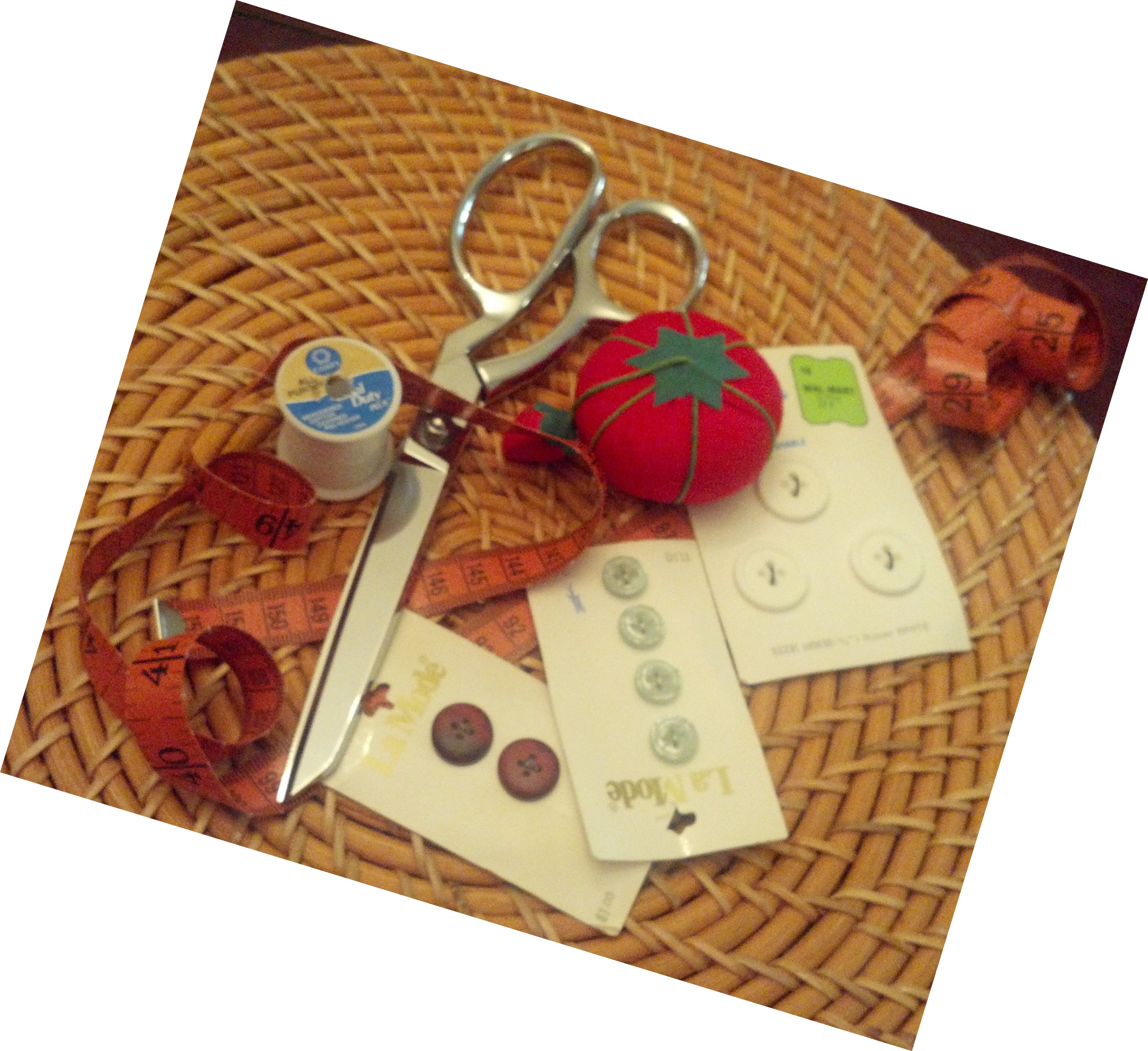
Scissors, Pin Cushion. Buttons, thread, tape measure

4)  Don’t bring your measurements with you.

Hey, I’m with you on this step.  I know it is much more comfortable just guessing at how many inches wide your bust, waistline and hip is.  Doing so has the added benefit of ensuring that you buy a pattern that is not going to fit you when it’s done.  You really get triple bonus points for this manner of not sewing, because you not only end up with something you can’t use, you also get to put in all the time and effort into sewing the garment before you realize it.  In the unlikely event that you want a garment you can wear when it’s finished, bring your (updated, true) measurements to the fabric store for pattern selection, even if you have to store them in an underground dungeon guarded by a dragon and two trolls to conceal them from the rest of the world the rest of the time.

Confusion

From Print Shop Professional 2.0

5) Believe Vogue patterns when they say a pattern is easy. 

Vogue labels its patterns in terms of difficulty.  The other three of the big four do so with at least some of their patterns.  However, unlike the other three, Vogue’s idea of easy is very different from a beginner’s idea of easy.  I have begun to think that perhaps by “easy” they mean “easy for an accomplished career seamstress.”  Or maybe it just means “easy for anyone else except you, Nancy.”  For those few people who actually want to end up with a garment they can wear, you are pretty safe with Vogue’s “pretty easy” or lower ratings.

My Seersucker Short Stash – Try saying that three times fast!

6) Buy the fabric amount listed for a smaller size. 

I am a pro at doing this.  The back of a pattern contains a wealth of information, and does it in two different languages.  This means that the chart listing the needed amounts of fabric is very crowded and it is easy to select the wrong fabric size for the garment.  In addition, this step has the added benefit of being unfixable, since the fabric normally has sold out between the time you bought it and the time you discover the mistake.  For those few wishing to avoid such a mistake, the pen is your friend – circle the correct size and fabric amount on the garment before you start looking for fabric.

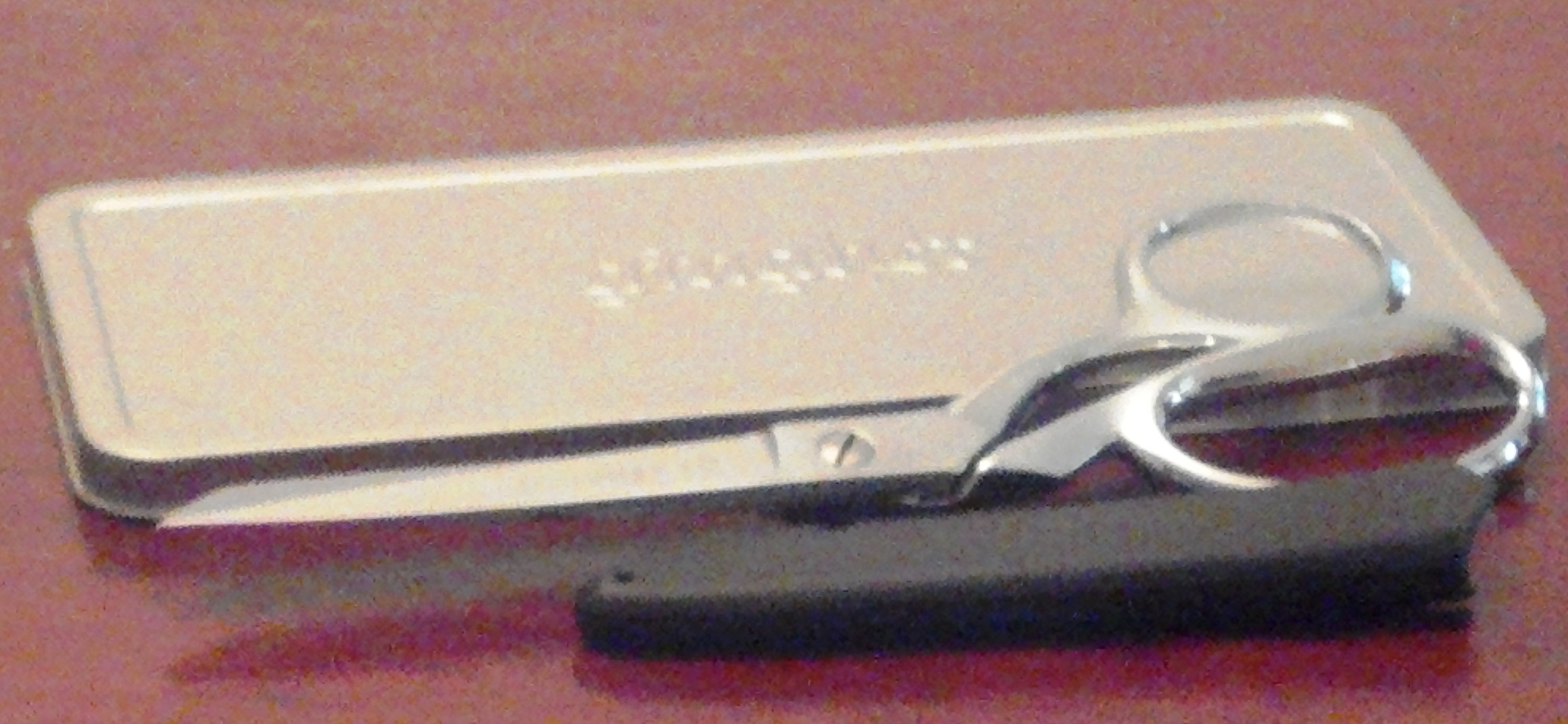
My Sunday Go To Meeting Scissors, with a case to ensure that no one but me uses them!

7) Use the wrong layout for the pattern size you need, and cut out part of it before you notice your mistake. 

Sewing patterns show you how to lay the various pattern pieces out before cutting.  However, to minimize the amount of fabric needed, a pattern will normally present several different layouts.  It also matters whether you have purchased a fabric 44 – 45″ wide or 58-60″ wide.  The best way for this mistake to occur is to use the 58-60″ layout for a 44-45″ wide fabric, and do it for an incorrect size.  44-45″ fabric is never big enough to complete a 58-60″ layout.  For those few who might care to avoid this mistake, remember your mantra – the pen is your friend.  Circle the correct layout(s) before you begin to place and cut out pattern pieces.

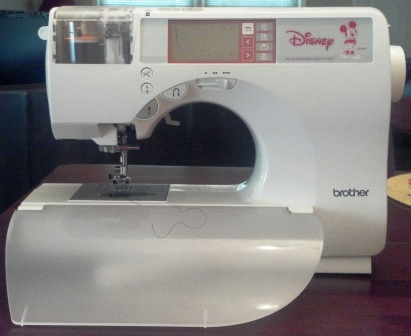
Brother Sewing Machine

My Sewing Machine

8) Use someone else’s sewing machine. 

Sewing machines have a life and a mind of their own.  They adopt one primary owner and throw the rest of us under the bus.  It was at least 15 years before my mother’s machine reconciled itself to the fact that her children would be using it also.  Until then, each of us faced a myriad of tangled threads, knots and machine malfunctions while our mother never faced one.  Mom recently gave it to my sister, who had to remind it at one point that it was not going to get to go back home to Mom, so it might as well reconcile itself to her.  I’m not sure it has done so.

My Gingher Scissors Are Perfect for Step 9.

9) Trim seams recklessly and with abandon. 

Picture the Swedish Chef meets  “Sewing with Nancy.”

Black lab, crazy Dog

With Darwin around, we don’t need to borrow a lab puppy.

10) Leave the garment lying around carelessly. 

If, in spite of your best efforts, you end up with a garment that you can wear, there is one last-ditch effort you can try to be sure that you are “not” sewing.  It does require an extra ingredient – at least one animal that likes to chew.  If you don’t have one, borrow a friend’s Labrador puppy, age 1 or older.  Leave the garment somewhere where the animal can easily reach it, and go away.  The outfit will be destroyed in about 10 minutes, tops.

Sew, Sewing Tools

From Print Shop Professional 2.0

And so there you have it, ladies and gentlemen – How Not to Sew in 10 Easy Steps.

Have a great weekend!

Nancy

Kayla’s Clouds


Good morning Everyone!

One of the advantages of being a parent is the chance to see the various and amazing (sometimes potentially infuriating)  ways that your child finds to fill time when he or she is bored.  Having finally procured a card reader the other day, I was able to download all of the pictures from  Mark’s Nikon, about five months worth, and in the middle of the download was surprised to see a number of pictures of skies and clouds which Kayla must have taken one day when she and I were driving somewhere together.  She took some through the sunroof, some through the side window and some through the windshield.

Cloud, photography

Through the Sunroof

Although the entire batch was a little bit repetitive – if you look through all 56 of them, several times you feel like you are watching a movie that has disjointed frames – several of the pictures were interesting and noteworthy.

Cloud, Photograph, sunroof

Also through the sunroof

I picked out a few of the more notable/representative photographs to share with you.

Cloud, Photography

Cloud 3

I could tell, for the most part, which clouds were photographed through the windshield/side window and which were photographed through the sunroof, but the picture above is one I am not certain about.

Cloud, photography, windshielf

Through the windshield

This picture was taken through the windshield. I am certain of it, due to the angle of the roadside and an idea about the road we were on at the time.

Cloud, Photography

Illumination!

The glow of the sun behind the cloud in this picture makes the question of whether it was taken through the sunroof or the side window seem irrelevant, but I still couldn’t tell you which this was.

The final picture I am sharing with you is like a kiss from God.

Cloud, photography, sunroof

Kiss from God

Maybe I should leave her to her own devices more often!

Have a great day!

Nancy

Presidential Graduates of the Electoral College


Good morning Everyone!

(Any mistakes in the following post are to be prefaced by the following mantra:  “Mr. Moon taught me but I forgot.”)

Today we return to the travel diaries of the famous world traveler, Hester Ugg of Bowling Green, Kentucky.  After her stop in ?istan, where we last saw her visiting with her friends, Ahmed and Vladimir, (See, 51 Governments and Then Some), she traveled to Turkey, Greece , Cyprus and Crete, then returned back to ?istan to visit with her friends once more before returning to Kentucky for college football season.  (Many travel plans and family events in the South are scheduled around football season.)

As they sat down for tea (a habit Hester picked up from her travels through the former territories of the British empire), Vladimir and Ahmed greeted her warmly.  Then the conversation turned to current events.

Ahmed, wisely:  I see where the election in the United States has started.

Hester, recalling a “Ron Paul for 2016” banner she saw at a rally two months ago:  Sometimes I don’t think the election ever stops!

Vladimir:  I thought your elections were once every four years?

Hester:  Oh Vladimir, it’s really too hot today to discuss politics, if you don’t mind. 

Vladimir:  I understand, dear lady.  I will instead congratulate your country on having such well-educated presidents.

Hester, confused:  I beg your pardon?

Vladimir, graciously:  I understand from some of my readings that each of your presidents must graduate from a college before they can be president.

Hester:  Well, our presidents, especially modern ones, do generally tend to have college degrees, but the last time I checked, they definitely don’t have to have one.

Vladimir, proud that he knows something about the United States that Hester doesn’t:  Ah-ha!  If that is so, then why does each president have to graduate from an electoral college before they become president?

Hester, mentally cursing the Russian language’s omission of definite articles such as “the”:  They don’t.  They have to be elected by the Electoral College before they become president. 

Ahmed:  I thought the United States was a democracy?

Hester, resigned to yet another grammatical and political tangle:  Technically, it is a federalist republic. 

Vladimir:  Is there a difference?

Hester:  Yes.  In a democracy, everything is voted on by all of the people together.  Each person has one vote.  So, for example, if a new law about basket-weaving is needed, the law is proposed and sent out to all of the population to be voted upon.

Ahmed, confused:  Why would anyone make a law about basket-weaving?

Hester:  It’s just an example, Ahmed. 

Vladimir:  And a republic?

Hester:  In a republic, each person has the right to vote for people who will represent him or her  in a legislative or executive capacity.  Large areas are broken down into smaller areas, each of those smaller areas are assigned a representative, and then the people in that area vote to chose the person that will be the representative.  That representative then goes to vote or work for the people in his or her area. 

Ahmed:  Ah, but the president is the leader of your entire country, so that would mean that everyone votes for the president at once? 

Hester:  Not exactly.  That’s where Vladimir’s Electoral College comes in.  Each person votes for an elector from his or her area that is pledged to vote for a particular candidate.  The electors then vote for the president. 

Vladimir:  Shouldn’t the results be the same between the two methods?  If everyone votes for president through electors, then the person who gets the most votes will win, regardless?

Hester:  Not always.

Ahmed:  Then the United States can’t be a democracy!

Hester, annoyed:  Ahmed, I already told you we are a republic.  There’s a difference!

Vladimir:  Why have a method of voting that would allow a person with less votes than another to win? 

Hester:  Well, there are people in the United States that agree with you Vladimir, and think we should do away with the Electoral College and simply go with a simple majority vote for president. 

Ahmed, curious:  What about you?

Hester:  I’ve thought about it a lot, and I disagree with them.  The current way in which we elect presidents ensures protections not only for the majority of people, but for minorities as well. 

Vladimir:  Do you really want to tackle civil rights today?

Hester:  No, I’m not talking about discrimination, but providing protections for the rights of rural as well as municipal areas. 

Ahmed:  That’s about as clear as mud.

Hester:  When the Constitution was created, there were thirteen states.  The states with less people in it were concerned that the states with more people in them would simply be able to ride rough shod over them if protections were not provided.  A great deal of the unique and great aspects of the United States Constitution come from the compromises that solved the small state/large state dilemma. 

Ahmed:  Wasn’t Benjamin Franklin involved in that somehow?

Vladimir:  Of course.  Benjamin Franklin was involved in everything. 

Hester, ignoring the non-sequiturs:  One of the compromises involved establishing two parts of Congress, the Senate and the House.  Each state is allowed two, and only two, senators.  In the House of Representatives, though, the number of representatives a state has is decided by the population of that state.

Vladimir, politely:  Gesundheit.

Ahmed:  I don’t think he understood.

Hester:  For example, the state with the most people in it is California.  The state with the fewest number of people in it is Wyoming.  Both  California, with its approximately 53 million people, and Wyoming, with its less than 800,000 people, have two senators each.  However, California has 53 Congressmen, while Wyoming has one Congressman.

Ahmed:  I understand all that, but what on earth does that have to do with the Electoral College?

Hester:  Well, the number of electors a state has is also based upon population.  California in 2004 and 2008 had 55 electors and Wyoming in 2004 and 2008 had 3 electors.  When people go to elect the president, their vote is tallied district by district, so Wyoming’s district 1 can vote for candidate 1, while Wyoming’s district 2 will vote for candidate 2.  In all but two states, Maine and Nebraska, the candidate with the most districts gets all of the electoral votes of that state.  So, for example if candidate 1 has 26 of California’s districts, and candidate 2 has 25 of California’s districts, then candidate 1 gets all 55 of California’s electoral votes.

Vladimir:  Then what I said is true  – the person with the most votes will still win the election. 

Hester:  Most of the time that is true, but not always.  If a candidate takes, for example, 20 districts with smaller populations in a state, while the other candidate takes 19 districts from cities, then the candidate with 20 districts wins all of the votes for that state, even though his or her popular vote in that state is less.  It’s happened four times in the history of the United States – 1824, 1876, 1888 and 2000.

Ahmed, confused:  And you think that is a good thing?

Hester:  Well, as I said, there are people who disagree, but as it stands, the system prevents a large urban majority from trampling upon the rights of smaller areas.  This means that a presidential candidate cannot really expect to be elected by promising areas with large populations everything they want at the expense of the smaller populations.  The candidate has to appeal to at least some of the smaller communities. 

Ahmed, thoughtfully:  I see your point, but I can see why some people would not agree. 

Hester, taking a sip of her tea, which has had enough time to cool:  Anyway, Vladimir, do you understand what I am trying to tell you?

Vladimir, firmly:  Yes.  Every president of the United States must graduate from THE Electoral College, not AN electoral college.

Hester, defeated:  I knew it was too hot for politics today.

Have a great day everyone!

Nancy